Introducing Basedash audit logs
Max Musing
 Max MusingFounder and CEO of Basedash
· August 1, 2026
Max MusingFounder and CEO of Basedash
· August 1, 2026
Max Musing
Max MusingFounder and CEO of Basedash
· August 1, 2026
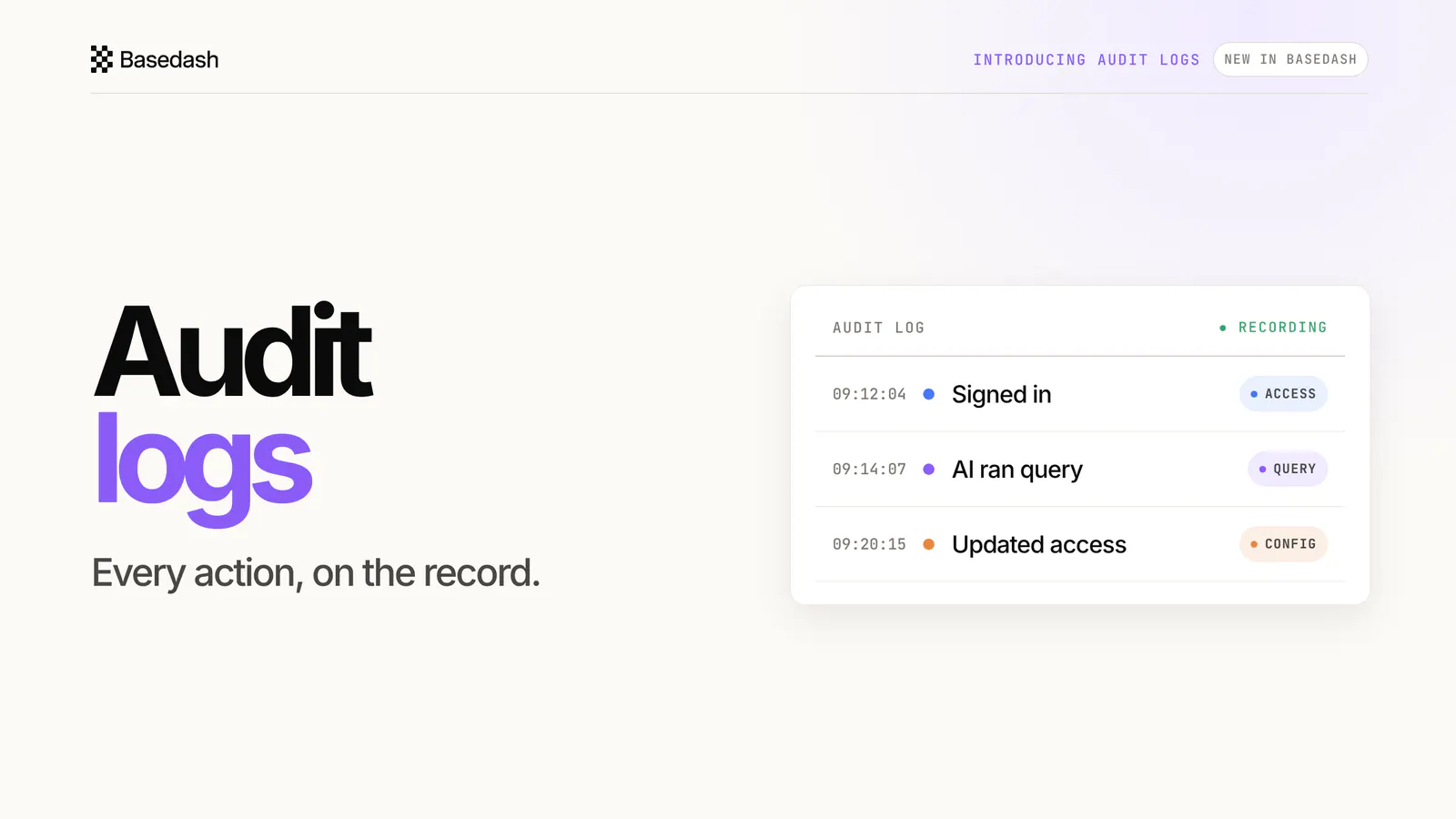
Today we’re launching audit logs for Basedash, a native record of everything that happens in your organization: who signed in, who viewed what, which queries ran, and how important settings changed.
For security, IT, and compliance teams, audit logs turn trust in a BI tool into something you can prove. When the security review asks who accessed customer data last quarter, the answer should take seconds and shouldn’t require an investigation.
Analytics touches the most sensitive data a company has. Revenue, customers, headcount, and margins all flow through dashboards and queries. As adoption grows, so does the number of people (and now AI agents) interacting with that data every day.
Many BI tools keep no record of any of it. Someone views a dashboard, exports a CSV, or changes who can query a data source, and there is no durable record that it happened. That becomes a problem as soon as a security review, a compliance audit, or an incident asks who did what, and when.
Basedash audit logs record access, queries, and configuration changes as they happen, so the answer to “who saw this?” is always in the log.
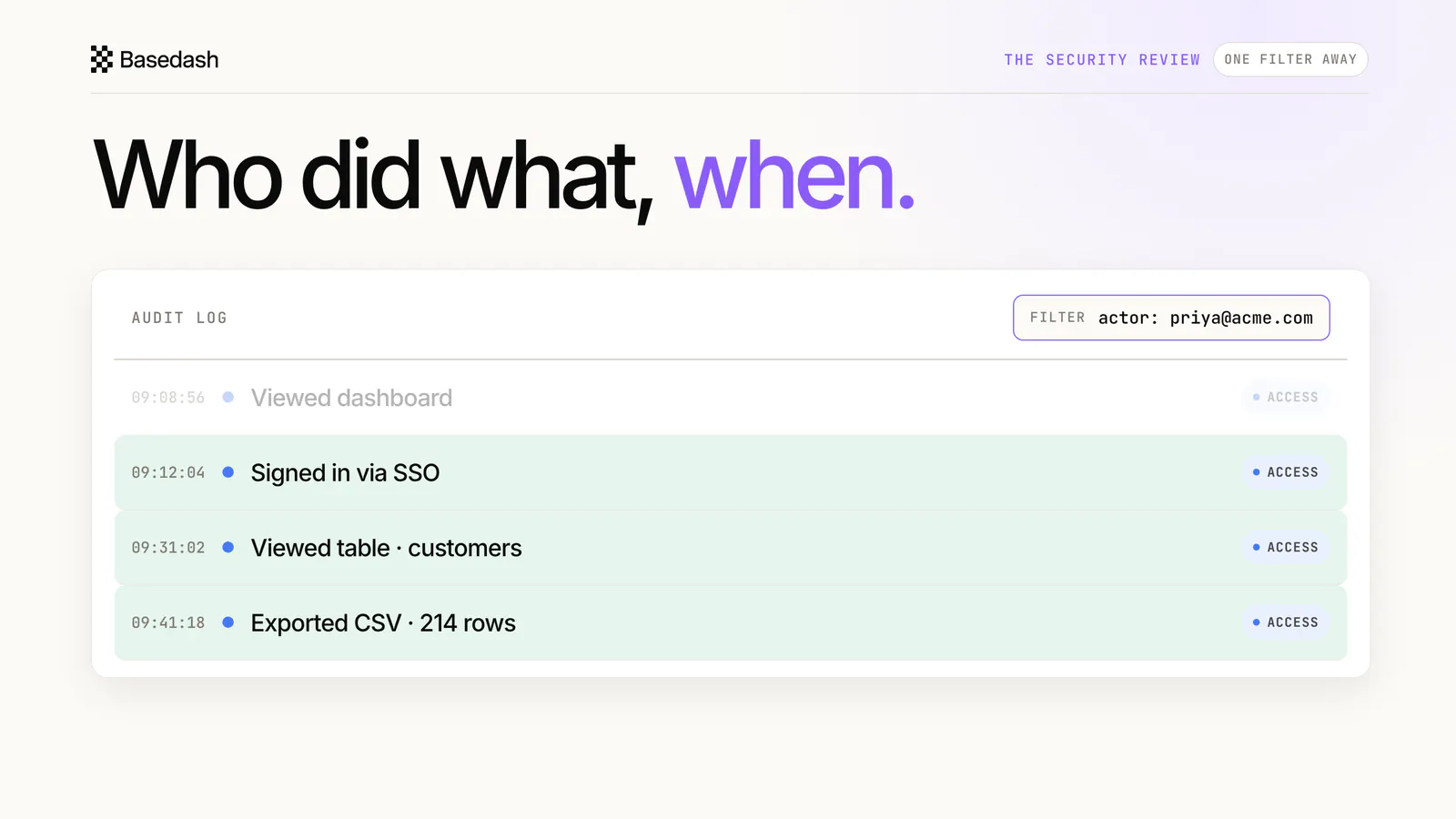
One filter turns the log into an answer: who did what, when.
The audit log is a single, chronological record of activity across your Basedash organization:
Each event carries the actor, the action, the resource, and the timestamp. Filter by person, action, or time window to narrow the log to the events you’re asking about.
Basedash is an AI-native BI platform, so the first question security teams ask is a fair one: what is the AI doing with our data?
Audit logs make that answerable. When Basedash AI answers a question, the query it ran is logged, attributed, and traceable, including the question asked, the SQL that ran, and who the AI was working for. AI activity is held to the same standard of accountability as any analyst on the team.
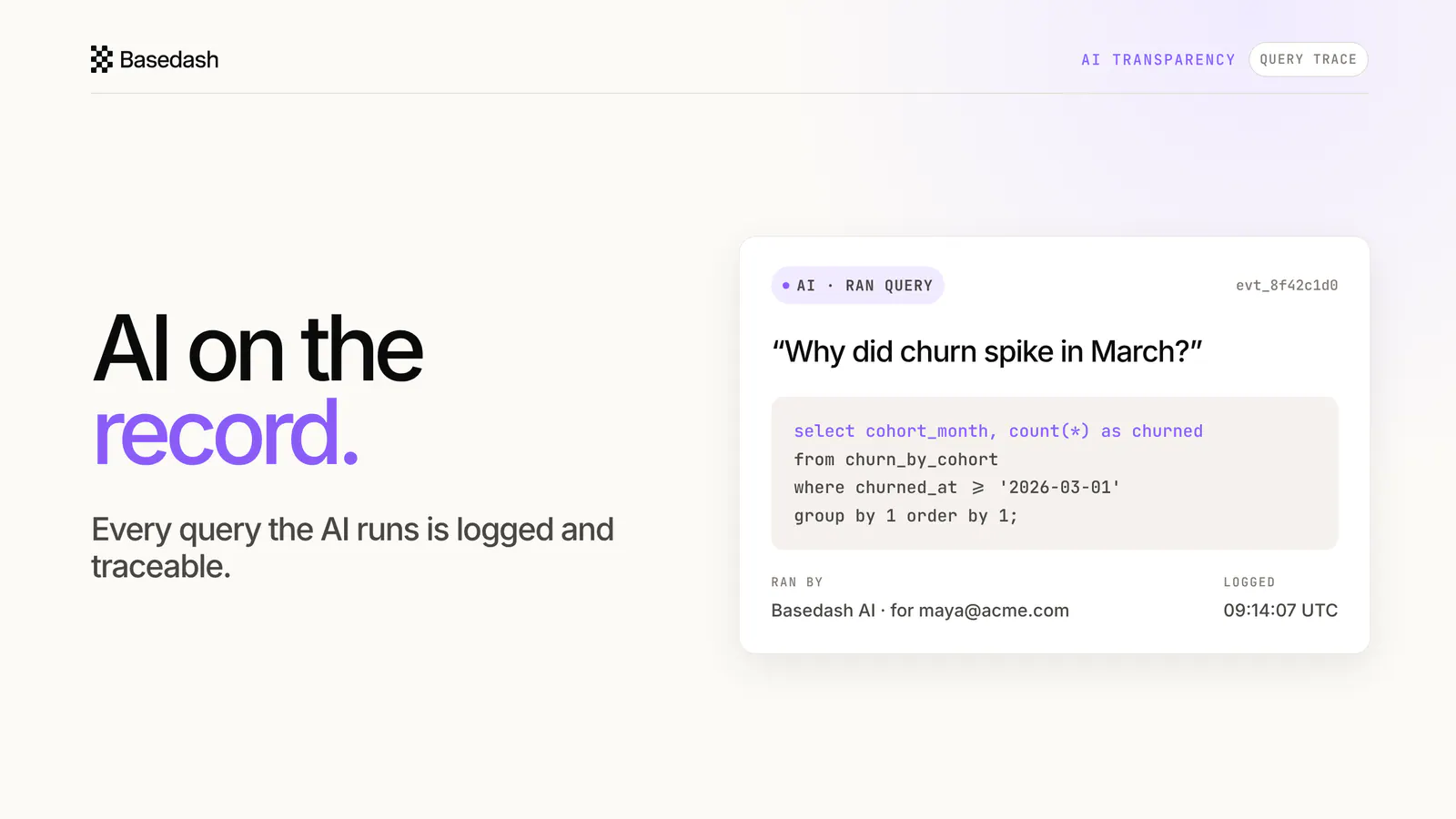
Every query the AI runs is logged, attributed, and traceable.
Audit logs are designed to slot into the review processes and tooling your security team already runs:
They join the rest of Basedash’s enterprise controls (SSO, SCIM provisioning, role-based access control, and row-level security) and complement our SOC 2 Type II compliance. Together, they cover central identity, explicit authorization, governed data access, and now a complete record of it all.
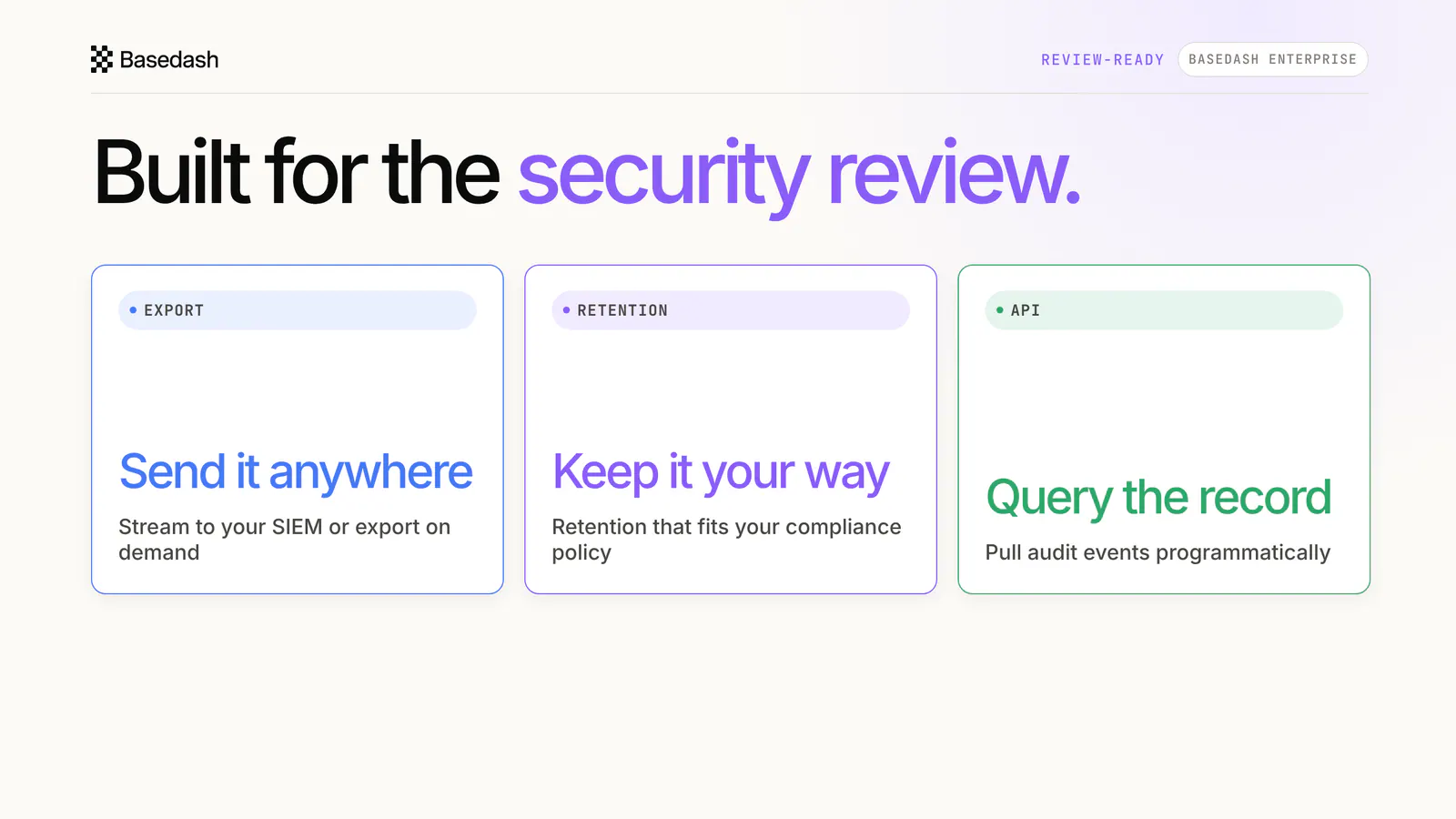
Export, retention, and API access, built for the security review.
Audit logs are available on the Basedash Enterprise plan. Talk to the Basedash team to plan your rollout or walk through a security review together.
You can also explore Basedash’s broader enterprise controls and security model.
Roll out analytics your security team can stand behind, with every action on the record.
Written by

Founder and CEO of Basedash
Max Musing is the founder and CEO of Basedash, an AI-native business intelligence platform designed to help teams explore analytics and build dashboards without writing SQL. His work focuses on applying large language models to structured data systems, improving query reliability, and building governed analytics workflows for production environments.
Basedash lets you build charts, dashboards, and reports in seconds using all your data.