
Max Musing
Founder and CEO of Basedash
Max Musing is the founder and CEO of Basedash, an AI-native business intelligence platform designed to help teams explore analytics and build dashboards without writing SQL. His work focuses on applying large language models to structured data systems, improving query reliability, and building governed analytics workflows for production environments.
Posts by Max Musing

BI tool pricing in 2026: plan prices, seat limits, and what the AI costs in 13 tools (October 2026)
Zoho, Metabase, Qlik, and ThoughtSpot publish AI-inclusive BI prices; Power BI Copilot needs Fabric capacity and Tableau Agent needs Cloud+. October 2026 data.
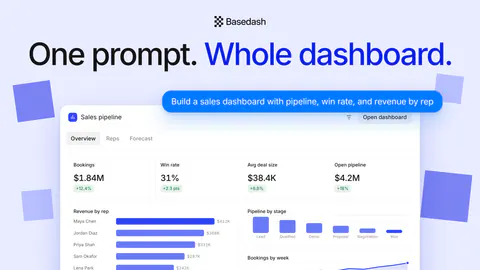
Chat builds whole dashboards, live in the conversation
Type one prompt in Basedash chat and get a whole dashboard back, previewed live in the conversation: KPIs, charts, tables, filters, and tabs you can use before you open it.

Sisense alternatives (2026): 8 embedded analytics platforms compared on pricing, React SDKs, multi-tenant security, and AI chat
Luzmo, GoodData, Embeddable, Databrain, Metabase, ThoughtSpot, Sigma, and Basedash compared as Sisense alternatives on pricing, SDKs, tenant isolation, and AI.

Best BI tools for sharing dashboards externally: viewer licensing, secure links, and guest access compared (2026)
Power BI, Tableau, and Sigma license most external viewers; Data Studio, Metabase, Domo, and Basedash can share without viewer seats. Compare links and scoping.

Qlik Sense alternatives (2026): 8 BI tools compared for teams leaving QlikView or Qlik Cloud capacity pricing
Power BI, Tableau, Sigma, ThoughtSpot, Omni, Metabase, Astrato, and Basedash compared as Qlik alternatives on pricing, live queries, RLS, SSO, and AI.
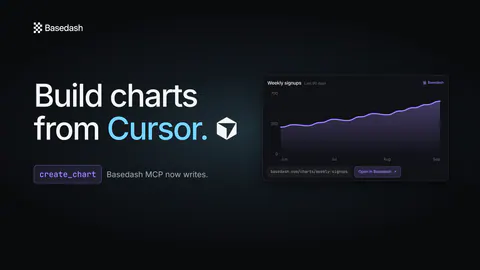
Introducing Basedash MCP write: build charts from anywhere
The Basedash MCP server can now write, not just read. From Cursor, Claude, or any MCP client, ask for a chart or a whole dashboard and get back a real Basedash artifact with a durable link and a rendered image.

BI tool security features by plan: which tier unlocks SSO, SCIM, row-level security, and audit logs (September 2026)
Power BI, Tableau, Looker, and Metabase Pro offer SAML SSO below enterprise tiers; Hex, Preset, Lightdash, and Basedash keep SSO and SCIM on Enterprise.

Domo acquired by Progress Software: what it means and the best alternatives in 2026
Progress Software closed its $400 million acquisition of Domo in September 2026. Here's what the deal means for Domo customers, how to decide whether to migrate, and the best Domo alternatives.

Hex alternatives (2026): 8 modern BI tools compared for AI, semantic layers, and easier setup
Basedash, Sigma, Omni, Mode, Metabase, Preset, Lightdash, and Evidence compared as Hex alternatives on AI, semantic layers, pricing, and setup effort.
Introducing Basedash Models
Definitions grew into a semantic workspace of reusable, governed SQL. Query a model like a table, and the assistant reads its measures, segments, and relationships.

Introducing Basedash in English, Español, Français, and Português
Choose English, Español, Français, or Português in profile settings and the Basedash interface switches instantly, with no page reload.

Best BI tools for Supabase (2026): dashboards that respect RLS, from AI to open source
Basedash, Metabase, Grafana, Preset, Retool, Evidence, Hex, and Lightdash compared as BI on top of Supabase Postgres: RLS, AI, embedding, and pricing.

Best BI tools with usage-based pricing for growing teams (2026)
Domo, ThoughtSpot, Sigma, Hex, Cube Cloud, Basedash, and Snowflake Cortex Analyst compared on how usage is metered, hidden costs, and today's prices.
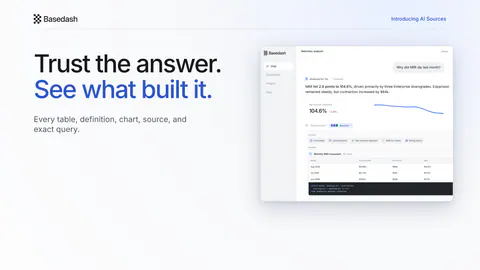
Introducing AI Sources: see what built every answer
Inspect the tables, definitions, charts, connections, web pages, SQL, and returned rows behind every AI answer in Basedash.
Data exploration: how to get to know a dataset before you analyze it
Data exploration is how you get to know an unfamiliar dataset before analyzing it. Learn a repeatable workflow, a profiling checklist, and mistakes to avoid.

Data debt: what it is, how it builds up, and how to pay it down
Data debt is the accumulated cost of shortcuts in your data, metrics, and dashboards. Here's how to spot it, price it by impact, and pay it down steadily.

Vanity metrics vs actionable metrics: how to tell the difference
A vanity metric looks impressive but never changes a decision. Here's a four-question test to separate vanity metrics from actionable ones on any dashboard.

How to build a customer 360 view without a CDP
A customer 360 is one unified record per customer joined from your CRM, product, billing, and support data. Here's how to build one in your warehouse.
Measures vs dimensions: the distinction behind every chart
Dimensions are what you group by; measures are the numbers you aggregate. Here's how to tell them apart and why the split shapes every chart you build.
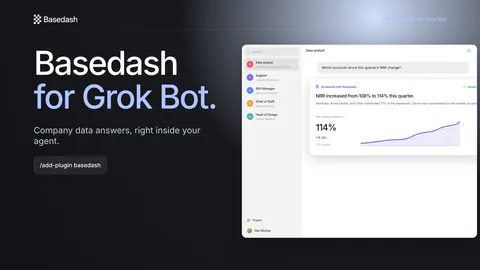
Introducing Basedash for Grok Bot
Install the official Basedash plugin in Grok Bot to ask questions of governed company data and list the connected sources available to you.
Data cardinality: what it is and how it shapes your dashboards
Data cardinality is the number of distinct values in a column. Here's why it shapes dashboard speed, chart choices, and filters, and how to tame it.

How to build dashboards on MySQL data
How to build dashboards on MySQL: connect a BI tool safely, keep heavy reporting queries off production writes, and choose live queries vs a read replica.

Power BI vs Excel: which should you use for reporting?
Power BI vs Excel for reporting: use Excel for ad hoc analysis and modeling, Power BI for recurring dashboards from live data. A practical guide to choosing.
ETL vs ELT: what the difference means for your analytics stack
ETL transforms data before loading it; ELT loads raw data first, then transforms it in the warehouse. Here's how they differ and which one fits your stack.

How to analyze an A/B test with SQL
Analyze an A/B test with SQL: count users and conversions per variant, calculate lift, run a two-proportion z-test, and avoid the mistakes that fake wins.

SQL window functions: the analytics queries that actually matter
Window functions calculate across related rows without collapsing them, which is how you write running totals, rankings, and period-over-period growth in SQL.
How to build an OKR dashboard that tracks against live data
An OKR dashboard shows each key result's baseline, target, current value, and pace against live data. Learn how to build one that updates itself, not by hand.
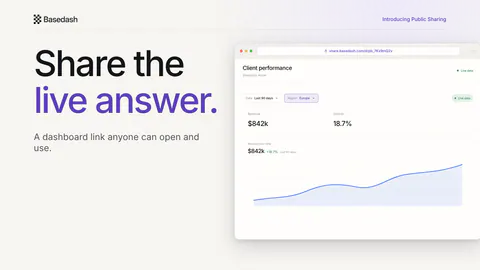
Introducing public sharing: live dashboards for anyone
Send a live Basedash dashboard or chart to a client, investor, leader, or contractor with one link. They can open, filter, and sort it without a Basedash account.

How to build dashboards on SQL Server data
How to build dashboards on SQL Server: connect a BI tool safely, avoid blocking your production database, and choose live queries vs a read replica or copy.
How to calculate net revenue retention (NRR)
Net revenue retention tracks recurring revenue kept and expanded from existing customers. Learn the NRR formula, how to calculate it in SQL, and benchmarks.

Do you need a data catalog? A practical guide for lean teams
Most lean teams don't need a dedicated data catalog yet. Here's what one does, the signals that mean you actually need it, and a lightweight alternative.
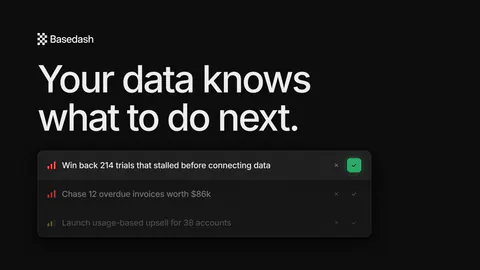
Introducing Tasks: your operations, on autopilot
Tasks is AI that reads your company's real data and turns it into a prioritized to-do list — specific, actionable work with a why-now, an expected outcome, and instructions. Ship a task, and Basedash tracks how your metrics move and learns. Now in research preview.
SQL query builders: visual, code, and AI, and when to use each
A SQL query builder lets you build database queries without hand-writing SQL. Compare visual, code, and AI query building, and learn when to use each.
DAU, WAU, and MAU: how to measure active users without fooling yourself
DAU, WAU, and MAU count unique active users over 1, 7, and 30 days. Learn how to define active, calculate each in SQL, and read the stickiness ratio.
How to build dashboards on Databricks data
How to build dashboards on Databricks: connect a BI tool to a SQL warehouse, the cold-start trap that makes dashboards feel broken, and how to control cost.
SQL for product managers: the queries that actually matter
Product managers don't need to master SQL. Learn the five query patterns that answer most product questions, plus when to reach for a BI tool or AI instead.
Spreadsheets vs databases: when to make the switch
Use a spreadsheet for quick, small, one-off analysis. Move to a database when data is shared, large, or a source of truth. Here's how to tell and migrate.
Data analyst vs data scientist vs data engineer: which roles does your team actually need?
Data engineers build pipelines, analysts answer business questions, scientists model and predict, business analysts translate needs. Here's who to hire when.
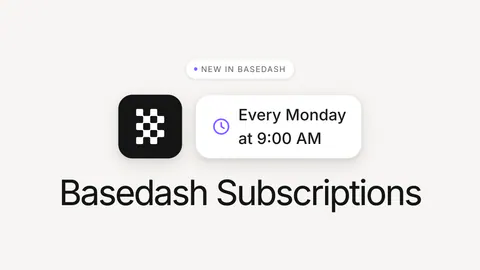
Introducing Basedash Subscriptions
Subscribe to any dashboard or chart in Basedash and get a fresh snapshot delivered on a schedule — to your inbox or a Slack channel. Pick a cadence like every Monday at 9am, choose who receives it, and the report just shows up. Reports that come to you.

How to run a data audit: a practical checklist for lean teams
A data audit is a periodic review of what data and dashboards you have, who owns them, and whether they're accurate and actually used. Here's how to run one.
What a BI tool actually costs: a total cost of ownership breakdown
The license is usually 30-60% of what you pay for a BI tool. Here's the full total cost of ownership: implementation, warehouse compute, people, and add-ons.

The SQL style guide: conventions that keep team queries readable
A SQL style guide is the naming, formatting, and structure rules a team agrees on so shared queries stay readable. Here's what to standardize, and why.
Data validation: what to check and where to enforce it
Data validation checks that data follows your rules before you trust it. Here are the rule types, where to enforce each one, and how to catch bad data early.

Data reconciliation: how to find why two numbers don't match
Data reconciliation means comparing two sets of numbers to find why they disagree. Here is a practical step-by-step workflow to track down the gap fast.

How to build dashboards on Amazon Redshift data
How to build dashboards on Amazon Redshift: connect a BI tool, the constraint gotcha that returns wrong numbers, materialized views, and controlling cost.
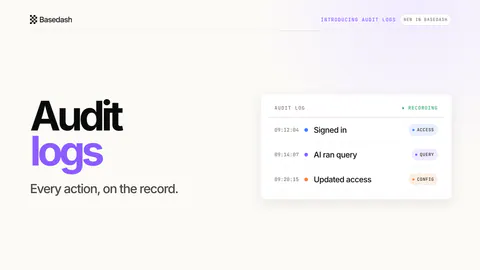
Introducing Basedash audit logs
Native audit logs record access, queries, and configuration changes across Basedash — including every query the AI runs — with export, retention controls, and API access.

Leading vs lagging indicators: how to build dashboards that warn you early
Leading indicators predict outcomes; lagging indicators confirm them. Here's how to pick leading metrics for a dashboard, with examples and a scoring rubric.
SeekWell shut down: what happened and the best alternatives in 2026
SeekWell shut down on July 31, 2026. Learn what happened to the SQL automation tool and how to replace its scheduled queries, spreadsheets, alerts, and workflows.
Data freshness: how current your dashboard data really is
Data freshness is how up to date your dashboard data is. Staleness adds up across every hop from source to screen. Here is how to measure and fix it fast.
How to build dashboards on ClickHouse data
How to build dashboards on ClickHouse: how to connect a BI tool, the FINAL gotcha that makes results wrong, materialized views vs raw tables, and when not to.
Dashboard vs report: what's the difference and when to use each
A report is a static, detailed snapshot for a set period. A dashboard is a live view of key metrics. Here is how the two differ and when to use each one.
Our AI benchmark couldn't detect a 7-point regression
Our eval harness compared leaderboard means across 3 trials, which made anything smaller than a 10-point change invisible. Here's how paired statistics and a hierarchical bootstrap turned it into something we can actually gate model switches on.
Sisu Data was discontinued: what happened and the best alternatives in 2026
Snowflake acquired Sisu Data and discontinued its standalone product. Learn what happened to the decision-intelligence platform and which alternatives fit its workflows.
Decision intelligence: what it is and how lean teams actually use it
Decision intelligence is the discipline of connecting data to the decisions and actions it should drive. Here is a plain definition and a working framework.
How to run a weekly business review (WBR): a practical operating guide
A weekly business review is a short recurring meeting where a team reviews its core metrics against plan to catch changes early. Here is how to run one.
Slowly changing dimensions: how to track historical data in your warehouse
A practical guide to slowly changing dimensions: the SCD types, a decision framework for choosing one, SQL and dbt patterns, and point-in-time reporting.
Hosted Redash shut down: what happened and the best alternatives in 2026
The managed Redash service shut down in 2021, while open-source Redash continues. Learn the difference and the best cloud and self-hosted alternatives.
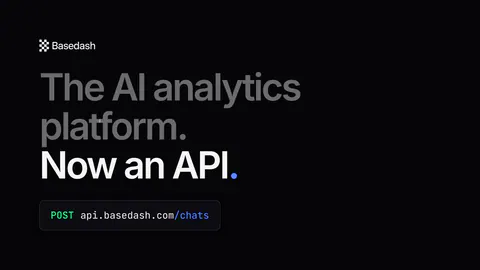
Introducing the Basedash developer platform
Everything Basedash does — AI data analyst chat, automatic daily insights, automations, dashboards — is now available through the API. Power your product's customer-facing analytics with a fully custom UI, or extend your internal BI in custom ways, all built on the AI data analyst ranked #1 on BI Bench.
What is analytics engineering, and when does your team need it?
Analytics engineering turns raw warehouse data into clean, tested, documented models BI tools can trust. Learn what the role does and when you need it.
How to build analytics dashboards on your Supabase data
How to build real reporting dashboards on your Supabase data: connection options, read replicas, the row-level security gotcha, and which BI tools fit.
The analytics maturity model: 5 stages and how to move up one
A practical analytics maturity model for lean teams: the 5 stages, how to diagnose which one you're in, and the single move that gets you to the next.
Chartio shut down: what happened and the best alternatives in 2026
Chartio shut down after Atlassian acquired it. Learn what happened to the visual SQL BI platform and which modern alternatives can replace its dashboards.
Teaching our AI agent what's actually in your database
Our chat agent was running 140 introspection queries per benchmark run against customer warehouses just to find the right tables. Here's how we built a schema catalog with search tools and bounded data profiling, and cut that to 2.
What are data contracts, and does your BI actually need them?
A data contract is an agreement on a dataset's schema, semantics, and quality. Learn what one includes, why dashboards break without them, and when to use them.

DataGPT shut down: what happened and the best alternatives in 2026
DataGPT, the conversational AI data analyst, has shut down. Here's what happened to the company and the best DataGPT alternatives for teams that still need natural language analytics.
How to do ad hoc analysis: a repeatable workflow for one-off data questions
Ad hoc analysis is how you investigate a specific, unplanned data question. Learn a repeatable six-step workflow, with SQL examples and mistakes to avoid.
What is a data mart, and does your team need one?
A data mart is a subject-focused slice of a data warehouse built for one team. Learn the types, how it differs from a warehouse, and when to build one.
Data storytelling: a practical framework for turning data into decisions
Data storytelling means structuring data so it drives a decision. A four-part framework for turning dashboards and reports into stories people act on.
Data quality metrics: what to measure and how to track it
The data quality metrics worth tracking, grouped by the six dimensions of quality, with concrete SQL checks, thresholds, and how to put them on a dashboard.
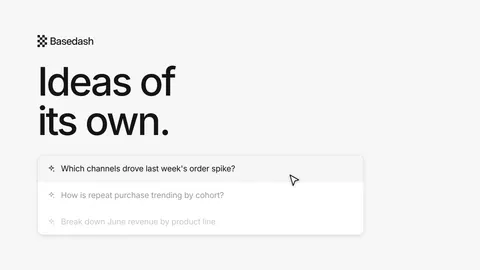
Introducing Basedash Suggestions
Basedash now generates personalized suggestions across chats, dashboards, and automations — questions worth asking, dashboards worth building, reports worth scheduling — all generated from your connected data, your past chats, and the work you've already done. One click and the analysis starts.
Management reporting: how to build a monthly management report
Management reporting is the recurring internal pack leaders use to run the business. Here is what to include, how often to run it, and how to automate it.
FP&A for startups: how to run financial planning and analysis without a finance team
How early-stage startups can run FP&A without a finance hire: build the model, automate the actuals, pick a stack by stage, and know when to buy software.
How to choose a north star metric: a practical framework
A north star metric is the single number that best captures the value your product delivers. Here's how to choose one, with examples and traps to avoid.
How to build a dashboard in Google Sheets (and when to move on)
A step-by-step guide to building a dashboard in Google Sheets: get data in, build charts and controls, keep it fresh, and know when to move to a BI tool.
Do you need a product analytics tool, or can your warehouse do it?
A buyer's guide to product analytics: when a dedicated tool like Amplitude or Mixpanel earns its keep, and when your own data warehouse can do the job.
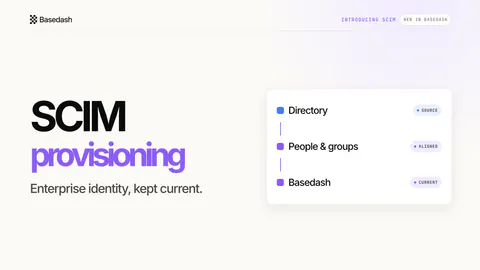
Introducing Basedash SCIM
SCIM provisioning keeps users, groups, and memberships aligned from Okta or Microsoft Entra ID as enterprise BI adoption grows.
How to build a customer health score: signals, weighting, and SQL
A practical guide to building a customer health score: which signals to use, how to weight them, SQL to calculate it, and how to validate it against churn.
KPI vs metric: what's the difference and how to decide what belongs on a dashboard
A metric is any number you track; a KPI is a metric tied to a goal. Here's the difference, with examples, and a simple test for what belongs on a dashboard.
How to build a budget vs actual report (variance analysis)
A step-by-step guide to budget vs actual reporting: join plan and actuals, calculate variance, flag what matters, and automate it instead of using Excel.

How a single timestamp broke our prompt cache
Our AI agents re-sent a huge stable prefix on every turn, and prompt caching should have made that nearly free. It wasn't caching at all. The culprit was one line in the system prompt, and fixing it turned into a full rework of how we build agent context.
How to choose the right chart for a dashboard
Choosing the right chart starts with the question you're answering, not the data. A practical guide to picking chart types for dashboards and reports.
A practical data governance framework for lean data teams
A data governance framework defines who owns data, how metrics are defined, and who can access what. Here is a lightweight version lean teams can actually run.
What is a single source of truth, and how do you actually build one?
A single source of truth is one governed place where each metric is defined once. Here is why teams lose it and how to build one that holds as you grow.
Customer segmentation: how to build segments from your data
Customer segmentation groups customers by traits, behavior, or value. Learn the main models and build RFM and behavioral segments in SQL that drive action.
Introducing Basedash Actions
The Basedash agent can now take action: write and run SQL edits against databases you've enabled, and act in Stripe, HubSpot, or any tool behind an MCP connector — with your approval on everything consequential. From answers to actions.
How to do cohort analysis: retention, revenue, and behavioral cohorts
A practical guide to cohort analysis with SQL. Build retention, revenue, and behavioral cohorts, read a cohort table, and avoid the mistakes that break it.
How to set up ecommerce analytics that show real profit, not just revenue
Platform-native reports show revenue, not profit. Here is how to unify Shopify, ad spend, and COGS into ecommerce analytics that measure contribution margin.
How we cut a JSON round-trip out of our query cache
On every cache hit, our run-query endpoint parsed JSON into objects just to serialize the same objects right back. Here's how we stored the raw bytes instead, and why the win showed up in event-loop delay more than wall time.
Data democratization: what it actually takes to give teams access to data
Data democratization means giving non-technical teams safe, usable access to data. Here is a framework for the four conditions it needs, and where it fails.
What is a data dictionary, and how to build one for analytics
A data dictionary documents what every field and metric means. Here's what to include, how to build one, where it should live, and how to keep it current.

We benchmarked 11 AI data analysts on real BI questions — here's what we found
We tested 11 AI data analysts on hard BI questions against a real production database. Basedash ranked first with 94.8% accuracy and a 32.6s average response time. Here are the full results and methodology.
Data masking in BI tools: how to protect PII in dashboards and AI queries
Data masking hides sensitive values so people can use a dashboard without seeing real PII. Here are the techniques, where to enforce them, and the tradeoffs.
Introducing Basedash for Excel
Basedash now works with Excel, both ways. Drop an .xlsx file into the agent and it reads, analyzes, and builds charts and dashboards from your data — and export any chart's data back to a .xlsx file in one click.
How to build a marketing dashboard: connecting GA4, ad platforms, and CRM data
A practical guide to building a marketing dashboard by unifying GA4, ad platforms, and CRM data, plus blended metrics, attribution, and tool options.
How to build an executive dashboard: metrics, layout, and cadence
An executive dashboard is a one-screen view of company health. Here is how to pick the metrics, lay it out, set targets, and run a weekly review.
What is OLAP, and do you still need an OLAP cube in 2026?
OLAP (online analytical processing) is how BI tools slice and aggregate data across dimensions. Learn what it means and whether you still need an OLAP cube.
How to model data for BI: star schemas, wide tables, and how much you actually need
How to structure data for BI dashboards: star schemas, wide tables, getting the grain right, and how much modeling your team actually needs.
We replaced Liveblocks with Postgres and SSE
We were paying for a realtime vendor to show online avatars. We already had Server-Sent Events and Postgres LISTEN/NOTIFY in production, so we built presence ourselves and deleted the dependency.
How BI tools combine data from multiple sources: federation, blending, and warehouses
How BI tools combine data from multiple databases: query federation, data blending, and centralizing in a warehouse, with the tradeoffs and when to use each.
How to build a SQL dashboard: from queries to a dashboard people trust
A practical workflow for building a SQL dashboard: connect a data source, write one query per tile, pick the right charts, add filters, and keep the numbers trustworthy.
Introducing groups and access controls
Groups and access controls let you decide exactly who can access what in Basedash. Bundle users into groups, grant each one access to the data sources, dashboards, chats, automations, and MCP servers it needs, and give every group its own AI context.
Scheduled reports in BI tools: how automated report delivery works
How scheduled reports work in BI tools: the delivery pipeline, push channels, report bursting, timing races, and a checklist for reliable automated delivery.
How to connect Snowflake to a BI tool: a practical guide
Connecting Snowflake to a BI tool is quick. This guide covers key-pair auth, a dedicated warehouse, governance, and cost controls that keep credits in check.
The modern BI stack for lean teams: what to build and what to skip
A layered framework for building analytics at a startup: the five layers of a BI stack, which ones to skip while lean, and when to add each as you grow.
How to connect BigQuery to a BI tool: a practical guide
Connecting BigQuery to a BI tool is easy. This guide covers connection methods, IAM setup, governance, and the cost controls that keep your bill predictable.
What we learned running background jobs on Postgres
We run every async job in Basedash on Postgres with pg-boss. Three production incidents later, here's what we changed: a queue policy that silently dropped 92% of jobs, batch work starving live chats, and a connection pool that gave out at the top of every hour.
Write-back in BI tools: what it means and when you need it
Write-back lets people edit data directly from a dashboard instead of just reading it. Here is how it works, the main patterns, the risks, and when to use it.
How to choose a BI tool for a small business
A practical buyer's guide to choosing business intelligence software for a small business: a fit test, a tool-type comparison, common mistakes, and a checklist.
How to safely connect a BI tool to your production database
Connecting a BI tool to production is safe with a read-only role, statement timeouts, and a read replica. Here is the full setup, step by step, for Postgres and MySQL.
BI tools for dbt: how to choose without duplicating your metrics
How to pick a BI tool for a dbt stack. The three ways tools connect to dbt, the semantic layer tradeoff, a comparison table, and a decision framework.
How to share dashboards outside your company securely
A practical guide to sharing BI dashboards with clients, investors, and partners: the methods, the security tradeoffs, and a decision matrix for each.
Introducing Basedash for Slack
Basedash for Slack is your AI data analyst inside Slack — now in the official Slack Marketplace. Mention @Basedash in any channel and get answers and charts back from your real data, plus automations and insights delivered where your team talks.
How to build a Salesforce analytics dashboard: data model, metrics, and tools
A practical guide to building a Salesforce analytics dashboard: the data model, the metrics that matter, sync pitfalls, and the tools that fit sales teams.
Data-driven decision making: a framework that goes beyond dashboards
Data-driven decision making ties specific decisions to evidence. Here's a practical framework for doing it well, beyond just building more dashboards.
Best BI tools with built-in semantic layers in 2026: a fact-based comparison
Seven BI tools with native semantic layers compared: Basedash, Holistics, Looker, Omni, Lightdash, Power BI, and ThoughtSpot on modeling approach, metric expressiveness, Git governance, AI readiness, and price.
How we cut our client bundle from 26 MB to 18 MB
We ran rollup-plugin-visualizer against the Basedash client bundle and found 7 MiB of stuff we didn't need to ship. Here's what was in there, why, and how we got rid of it.
Power BI alternatives in 2026: 8 modern BI tools compared
Power BI works, until it doesn't. Compare 8 alternatives by cost, AI features, semantic layer support, Mac/web access, and how migrations actually go.
How to connect MongoDB to a BI tool: a practical guide for analytics teams
A practical guide to connecting MongoDB to a BI tool. Covers Atlas SQL, the legacy BI Connector, ETL to a warehouse, schema tradeoffs, and tool options.
Hallucinations in AI BI tools: where they happen, why they happen, and how to prevent them
AI BI tools sometimes return wrong SQL, wrong charts, and wrong explanations. A practical guide to where hallucinations happen and how to design around them.
DuckDB for BI: when single-node analytics beats a cloud warehouse
When DuckDB is the right backend for a BI tool. Covers production patterns, where it beats Snowflake or BigQuery, and where it breaks down.
How to build a board reporting dashboard: metrics, structure, and cadence
A workflow guide to building a board reporting dashboard. Covers the four sections to include, the metrics that belong in each, layout patterns, narrative, and cadence.
How to design a BI permission model for a SaaS team
A practical four-layer framework for BI permissions: identity, workspace, dataset, and row level. Covers role design, common mistakes, and how major BI tools enforce access.
Introducing the Basedash semantic layer
Create reusable SQL definitions for metrics and models, then let Basedash AI reference them across chat, charts, dashboards, insights, and automations. Define the metric once. Use it everywhere.
Questions to ask before buying a BI tool: a buyer's checklist for 2026
BI demos all look the same. Use this 45-question checklist across data, modeling, AI features, governance, pricing, and support to evaluate vendors honestly.
Drill-down vs drill-through in BI tools: what they do and when to use each
What drill-down and drill-through mean in BI tools, how they differ in practice, when each one matters, and how major tools implement them.
How 97 Replicache subscriptions stalled our dashboard editor
Drag in edit mode froze the page for over a second on big dashboards. The cause was 97 Replicache subscriptions re-running on every keystroke. Here's how we moved the read path to TanStack DB collections backed by SSE, and kept Replicache for writes.
Multi-tenant analytics architecture: how to isolate customer data in embedded dashboards
Multi-tenant analytics architecture for SaaS embedded dashboards. Compares silo, pool, and bridge models, where to enforce tenant isolation, and common mistakes.
How to build a HubSpot analytics dashboard: data, metrics, and tools
A practical guide to building a HubSpot analytics dashboard. Metrics, data model, common pitfalls, and tools that fit revenue ops teams.
How to migrate from Looker to a modern BI tool: a practical playbook
A step-by-step Looker migration playbook: audit LookML, choose a replacement, rebuild dashboards, run cutover, and decommission. Includes a checklist.
How to design a metric tree: a practical framework for SaaS analytics
Most SaaS teams track KPIs in a flat list. A metric tree connects a north-star metric to the drivers and inputs people can actually move. Here's how to build one.
Introducing Basedash Embedding
Embed Basedash inside your own product so your customers get dashboards and the Basedash AI agent on their own data — without ever leaving you. Row-level security keeps every customer to their own data. Analytics, inside your product.
How to build a funnel analysis dashboard: SQL patterns, layout, and common mistakes
A practical guide to building a funnel analysis dashboard from event data. Covers SQL patterns, time windows, segmentation, layout, and the mistakes that quietly break funnel charts.
Paginating user-written SQL across every dialect we support
How we replaced a one-size-fits-all subquery wrapper with an AST-based query rewriter, and finally got SQL Server, Spanner, and Athena pagination to actually work.
How to evaluate AI data analyst tools: a 2026 buyer's framework
AI data analyst tools look similar in demos but behave very differently in production. Use this 5-dimension framework to evaluate 8 leading platforms in 2026.
How to build a Stripe revenue dashboard: data model, metrics, and tools
A practical guide to building a Stripe revenue dashboard. Covers the data model, MRR and churn calculations, common gotchas, and tools for any team size.
What was killing our healthy Kubernetes pods
Our pods were crash-looping and the logs said nothing. We chased an OOM, found something else entirely, and learned a Kubernetes default that should not be a default.
How to cut cloud data warehouse costs from BI dashboards
A practical playbook for cutting Snowflake, BigQuery, Redshift, and Databricks bills driven by BI dashboards. Diagnosis, SQL fixes, caching, Basedash Warehouse, and governance.
How to triage data requests: an intake framework for analytics teams
An intake and triage framework for data requests: a request taxonomy, a priority and effort matrix, an SLA model, and rules for what not to build.
How to build a customer success dashboard: a practical guide for SaaS teams
A step-by-step guide to building a customer success dashboard for SaaS teams. Covers metrics, data sources, layout patterns, common mistakes, and rollout.
BI as code: how to version control dashboards, metrics, and semantic models
How modern BI teams version control dashboards, metrics, and semantic layers with Git. Compares Looker, dbt, Power BI projects, Cube, Hex, and AI-native tools, plus a maturity model.
How to review AI-generated SQL: a checklist for analysts and operators
A practical review workflow for AI-generated SQL: a ten-point checklist, the failure modes that show up most often, and a rubric for when to trust the query.
Introducing Basedash Skills
Skills are reusable bundles of instructions that every Basedash AI surface — chat, charts, dashboards, automations, insights, and tasks — can read on demand. Teach Basedash once, and it learns everywhere.
How to make slow BI dashboards fast: a practical performance playbook
A practical playbook for diagnosing and fixing slow BI dashboards: SQL, warehouse tuning, caching, dashboard design, and tool-specific tips.
Dashboard sprawl: how to audit, certify, and retire dashboards as your company grows
A practical framework for managing BI dashboard sprawl: a four-tier trust model, a 60-minute audit, retirement rules, and an ownership model that lasts.
Operational dashboards vs analytical dashboards: how to design each
How operational and analytical dashboards differ in audience, refresh rate, and layout, with a design checklist for each and when one tool can do both.
Dashboard refresh strategies: live queries, scheduled refreshes, and cached extracts
A practical guide to choosing how often your BI dashboards should refresh: live queries vs scheduled extracts vs cached snapshots, with tradeoffs for cost, freshness, and performance.
Best financial reporting tools for board packs, consolidation, and audit trails (2026)
Workiva leads SEC filing, OneStream and Planful run consolidation, Vena, Datarails and Cube automate board packs in Excel, and Fathom fits QuickBooks and Xero.
Introducing Basedash MCP connectors
Today we're launching MCP connectors — plug Linear, HubSpot, Slack, Resend, Notion, GitHub, or any remote MCP server into Basedash and the agent can take action on the data it already reads. Connect any app. Act anywhere.
When to add a data warehouse: signals your startup has outgrown its production database
A practical decision framework for startups: when analytics on a production database is fine, when to add a read replica, and when a real warehouse is overdue.
How to migrate from Metabase to a modern BI tool: a practical playbook
A step-by-step Metabase migration playbook: audit, tool selection, dashboard rebuild, cutover, and decommission. Includes a checklist and common mistakes.
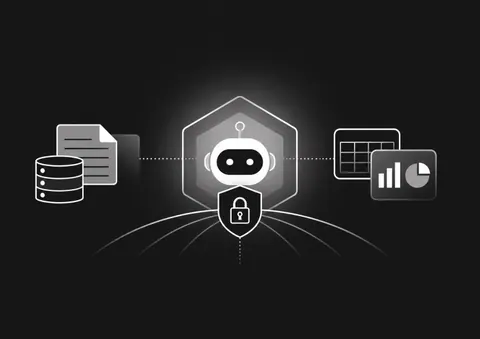
How to give AI agents safe access to your business data
A practical guide for letting ChatGPT, Claude, MCP servers, and custom AI agents query your business data without leaking PII, blowing up your warehouse bill, or giving an LLM root access.
Where to define business metrics: SQL views, dbt, semantic layers, or BI tool calculations
A practical guide to choosing where business logic should live in your data stack: warehouse views, dbt models, a semantic layer, or BI tool calculations. Includes a decision framework.
How to build a SaaS revenue dashboard: metrics, data sources, and structure
A practical guide to building a SaaS revenue dashboard. Covers which metrics to include, how to source data from Stripe and your app, layout patterns, and common mistakes.
How to run a BI tool proof of concept: a 30-day evaluation framework
A practical 30-day BI proof of concept framework with weekly milestones, a 7-criterion scoring rubric, vendor questions, hidden cost checks, and security review steps.
Best retail analytics tools in 2026: 7 platforms compared for store performance, inventory, and omnichannel insights
Compare 7 retail analytics platforms for store performance tracking, inventory optimization, demand forecasting, and omnichannel reporting across POS, warehouse, and ecommerce data.
Best client reporting tools in 2026: 7 platforms for branded dashboards, automated reports, and agency workflows
Compare 7 client reporting tools in 2026 — Whatagraph, AgencyAnalytics, Klipfolio, DashThis, Databox, Google Looker Studio, and Basedash — across branding, automation, and pricing.
Introducing the Basedash MCP server
Today we're launching the Basedash MCP server — a single URL that drops your data analyst into Claude Code, Cursor, ChatGPT, Windsurf, or any MCP-compatible client. Ask data questions where you already work.
Best KPI tracking software in 2026: 7 platforms compared for monitoring, reporting, and AI-powered insights
Compare 7 KPI tracking software platforms in 2026 — Databox, Klipfolio PowerMetrics, Geckoboard, Domo, ThoughtSpot, Power BI, and Basedash — across integrations, alerting, and pricing.
Best BI tools for collaborative analytics in 2026: version control, shared metrics, and team workflows compared
Compare 7 BI platforms on collaboration features: version control, commenting, shared metric definitions, Git integration, and team workflows. Covers Looker, Sigma, Hex, Basedash, dbt + BI, Holistics, and Omni.
Best data integration tools in 2026: 7 platforms compared for ingesting, syncing, and unifying data
Compare 7 data integration tools in 2026 — Fivetran, Airbyte, Stitch, Matillion, Talend, Hevo Data, and Rivery — across connectors, pricing, and warehouse support.
Best data transformation tools in 2026: 6 platforms compared for cleaning, modeling, and preparing data
Compare 6 data transformation tools in 2026 — dbt, Fivetran Transformations, Matillion, Coalesce, SQLMesh, and Datameer — across modeling, orchestration, and pricing.
Best reverse ETL tools in 2026: 6 platforms compared for syncing warehouse data to business tools
Compare 6 reverse ETL tools in 2026 — Census, Hightouch, Polytomic, RudderStack, Omnata, and Grouparoo — across warehouse support, sync speed, and pricing.
Introducing the Basedash Dashboard Agent
Today we're launching the Dashboard Agent — the first AI agent that builds entire dashboards end-to-end. Describe what you want to track and Basedash picks the chart types, writes the SQL, and lays everything out for you.
Best self-service analytics tools in 2026: 7 platforms compared for business teams
Compare 7 self-service analytics tools in 2026 — ThoughtSpot, Sigma, Basedash, Power BI, Domo, Metabase, and Qlik Sense — across AI querying, no-code dashboards, governance, and pricing.
Best white-label analytics platforms for SaaS in 2026: 7 tools compared
Compare Reveal, Qrvey, GoodData, Luzmo, Bold BI, Toucan Toco, and Basedash on branding depth, SDK vs iframe embedding, multi-tenant security, and pricing.
Best visual analytics tools in 2026: 7 platforms for interactive data exploration compared
Compare 7 visual analytics tools for 2026 — Tableau, Power BI, Qlik Sense, Looker, ThoughtSpot, Metabase, and Basedash — across interactive exploration, AI features, governance, and pricing.
Best data observability tools in 2026: platforms for pipeline monitoring, anomaly detection, and data reliability compared
Compare 7 data observability tools — Monte Carlo, Anomalo, Metaplane, Soda, Bigeye, Great Expectations, and Basedash — on detection, pricing, and fit.
Best data catalog tools in 2026: platforms for metadata discovery, governance, and AI-readiness compared
Compare 7 data catalog tools for 2026 — Alation, Collibra, Atlan, DataHub, Microsoft Purview, Informatica IDMC, and Basedash — across discovery, governance, integrations, and pricing.
Best data quality tools in 2026: platforms for profiling, monitoring, and cleansing compared
Compare 7 data quality tools for 2026 — Informatica, Ataccama, Monte Carlo, Great Expectations, Collibra, Anomalo, and Basedash — across profiling, monitoring, cleansing, and pricing.
Best data lineage tools in 2026: platforms for tracking data from source to dashboard compared
Compare 7 data lineage tools for 2026 — Atlan, Collibra, MANTA, Alation, OpenLineage, Microsoft Purview, and Basedash — across automation, granularity, integrations, and pricing.
Best data governance tools in 2026: platforms for metadata, lineage, and compliance compared
Compare 7 data governance tools for 2026 — Collibra, Alation, Atlan, Microsoft Purview, Informatica, OpenMetadata, and Basedash — across catalog, lineage, compliance, and pricing.
Introducing Basedash Automations
Automations are AI-powered workflows that analyze your data on a schedule, when something changes, or on demand — and deliver the results to Slack and email. Spin up an army of AI analysts who never sleep.
Best BI & dashboarding tools for Databricks in 2026: AI features, setup, and pricing compared
Compare 7 BI and dashboarding tools for Databricks in 2026. Covers AI capabilities, Unity Catalog integration, Delta Lake support, setup time, and pricing.
Best customer analytics tools for retention and churn in 2026: 7 platforms compared
Compare 7 customer analytics tools for tracking churn, retention, health scores, and expansion revenue — including Basedash, Mixpanel, Amplitude, Gainsight, ChurnZero, Looker, and Totango.
Best automated reporting tools in 2026: 7 platforms for scheduled dashboards, AI reports, and self-serve analytics
Compare 7 automated reporting tools for scheduled dashboards, AI-generated reports, and self-serve analytics — including Basedash, Looker, Power BI, Sigma, Metabase, Tableau, and Domo.
Best supply chain analytics tools in 2026: 7 platforms for inventory tracking, demand forecasting, and logistics visibility
Compare Kinaxis, Tableau, Power BI, Looker, Sigma, Metabase, and Basedash on ERP connectivity, demand forecasting, alerting, and pricing in 2026.
Best open source BI tools in 2026: 8 self-hosted options compared on AI, dbt, and security
Metabase, Superset, Lightdash, Grafana, Redash, Evidence, Rill, and WrenAI compared on license, AI, row-level security, SSO, and paid plans. Verified Sep 2026.
Best ecommerce analytics tools in 2026: 7 platforms for revenue tracking, customer insights, and cross-channel attribution
Compare 7 ecommerce analytics platforms for revenue tracking, cohort analysis, marketing attribution, and AI-powered insights across Shopify, BigQuery, and warehouse data.
Best BI tools for HR and people analytics teams in 2026: 7 platforms for workforce reporting, retention analysis, and headcount planning
Compare 7 BI platforms for HR and people analytics. Covers workforce dashboards, retention analysis, headcount planning, DEI reporting, and AI-powered insights across HRIS, ATS, and payroll data.
Best BI tools for predictive analytics and AI forecasting in 2026: 7 platforms compared
Compare 7 BI platforms with predictive analytics and AI forecasting. Covers time-series forecasting, anomaly detection, scenario modeling, and ML-powered predictions across Snowflake, BigQuery, and PostgreSQL.
Best BI tools for operations teams in 2026: 7 platforms for real-time monitoring, process optimization, and supply chain analytics
Compare 7 BI platforms built for operations teams. Covers real-time dashboards, supply chain analytics, SLA monitoring, anomaly detection, and AI-powered operational intelligence across ERP and warehouse data.
Best BI tools for sales teams in 2026: 7 platforms for pipeline tracking, forecasting, and rep performance dashboards
Compare 7 BI platforms built for sales teams. Covers pipeline analytics, CRM integration, sales forecasting, rep performance tracking, and AI-powered sales dashboards across Salesforce, HubSpot, and warehouse data.
Best BI tools for finance teams in 2026: 7 platforms for financial reporting, budgeting, and real-time P&L dashboards
Compare 7 BI platforms built for finance teams. Covers financial reporting, budget-vs-actual tracking, real-time P&L, row-level security, and AI-powered analysis across Snowflake, BigQuery, and ERP data.
Best BI tools for product teams in 2026: 7 platforms for tracking feature adoption, usage, and KPIs
Compare 7 BI platforms built for product teams. Covers feature adoption tracking, self-serve dashboards, AI querying, and integrations with PostgreSQL, Snowflake, and BigQuery.
Best tools to replace Excel dashboards in 2026: 7 platforms for teams outgrowing spreadsheets
Compare 7 platforms that replace Excel dashboards with live data, AI querying, and governed access. Covers Basedash, Power BI, Sigma, Metabase, Looker, Rows, and Sourcetable.
Best real-time dashboard tools in 2026: 7 platforms for live data, streaming analytics, and AI alerting
Compare 7 real-time dashboard platforms for live warehouse queries, streaming analytics, and AI-powered anomaly detection. Covers latency, pricing, and integrations.
Best marketing analytics tools in 2026: 7 platforms for cross-channel reporting and AI insights
Compare 7 marketing analytics platforms for cross-channel reporting. Covers ad integrations, warehouse-native architecture, AI querying, and pricing.
Best customer-facing analytics platforms for SaaS in 2026: 7 tools compared
Compare 7 customer-facing analytics platforms for SaaS products. Covers multi-tenant security, white-label embedding, pricing models, and which tools best serve customer portal dashboards.
Best AI data visualization tools in 2026: 7 platforms that turn questions into charts
Compare the 7 best AI data visualization tools in 2026. Covers natural language chart creation, automated insights, pricing, and which platforms work best for non-technical teams.
Best BI tools for AI anomaly detection and smart alerting in 2026: 7 platforms compared
Compare AI anomaly detection and smart alerting features across Power BI, ThoughtSpot, Domo, Looker, Sigma, Basedash, and Metabase. Covers detection methods, alert routing, root cause analysis, and evaluation criteria.
How to measure BI adoption and prove ROI: the metrics that matter
A practical framework for measuring BI tool adoption and calculating ROI. Covers the 12 KPIs that prove business intelligence value, with benchmarks, formulas, and tool-specific tracking methods.
Best BI tools for regulated industries in 2026: HIPAA, SOX, and GDPR compliance compared
Compare 5 BI tools on HIPAA, SOX, GDPR, and SOC 2 compliance. Covers certifications, audit trails, deployment models, and how to choose analytics for regulated industries.
Best BI & dashboarding tools for ClickHouse (2026): AI features, real-time performance, and pricing
Compare the 7 best BI and dashboard tools for ClickHouse by setup, real-time performance, AI features, pricing, and fit for different teams in 2026.
Best BI & dashboarding tools for MySQL (2026): AI features, setup, and pricing
An honest comparison of the best BI and dashboarding tools for MySQL in 2026. Covers AI capabilities, MySQL integration depth, setup complexity, pricing, and which tool fits your team.
Best BI tools for non-technical teams in 2026: 7 platforms compared
Basedash, ThoughtSpot, Sigma, Power BI, Domo, Metabase, and Tableau compared for non-technical teams: natural language querying, no-code dashboards, time to first insight, governance, and verified 2026 pricing.
Best BI & dashboarding tools for Amazon Redshift (2026): AI features, setup, and pricing
An honest comparison of the best BI and dashboarding tools for Amazon Redshift in 2026. Covers AI capabilities, Redshift integration depth, setup complexity, pricing, and which tool fits your team.
Best BI & dashboarding tools for PostgreSQL (2026): AI features, setup, and pricing
An honest comparison of the best BI and dashboarding tools for PostgreSQL in 2026. Covers AI capabilities, PostgreSQL integration depth, setup complexity, pricing, and which tool fits your team.
Best embedded analytics platforms compared (2026)
A side-by-side comparison of 8 embedded analytics platforms for SaaS teams — Looker, ThoughtSpot, Sigma, Tableau, Power BI, Metabase, Cumul.io, and Basedash — covering embedding, AI features, and pricing.
Best BI tools for row-level security in 2026: 10 platforms compared
Power BI, Metabase, Superset, Looker, Sigma, and Basedash all filter rows per user. See where each enforces RLS, which plan adds SSO, and what it costs.
Best semantic layer tools in 2026: platforms compared for BI and AI
Compare the top semantic layer tools in 2026 — dbt, Cube, AtScale, Dremio, Looker, Snowflake, Databricks, and Basedash — across features, pricing, AI readiness, and deployment.
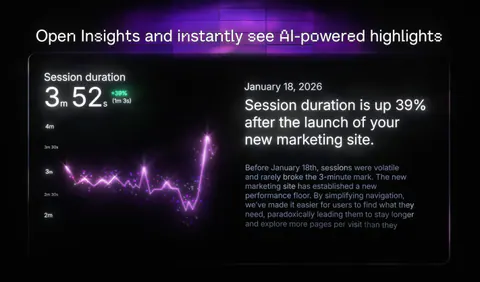
Introducing Basedash Insights
Today we're launching Insights — an AI agent that analyzes all your company data every day and surfaces the most important findings automatically. Think of it as a daily briefing from a data analyst who never sleeps.
Build vs. buy embedded analytics: a decision framework for SaaS teams
A practical framework for deciding whether to build or buy embedded analytics for your SaaS product. Covers 3-year TCO, engineering costs, and when each approach makes sense.
What is self-service BI? The complete guide to empowering every team with data access
Self-service BI lets non-technical users query, visualize, and analyze data without depending on analysts or engineers. Learn how it works, what to look for in a platform, and how to roll it out successfully.
How long does it take to implement a BI tool? A realistic rollout timeline
A realistic breakdown of how long BI implementation takes, from connecting data sources to full organizational adoption. Covers timelines for startups, mid-market teams, and enterprises, with a phased 30-60-90 day rollout plan.
What is business intelligence? How modern teams turn data into decisions
Business intelligence is the practice of collecting, integrating, and analyzing business data to support better decision-making. Learn how BI works, what a modern BI stack looks like, and how AI is changing the landscape.
What is operational analytics? How real-time data drives better day-to-day decisions
Operational analytics uses real-time and near-real-time data to improve day-to-day business decisions. Learn how it differs from traditional BI, key use cases, and what to look for in an operational analytics tool.
What is ad hoc reporting? How on-demand data analysis works and why every team needs it
Ad hoc reporting lets teams create one-off, on-demand reports to answer specific business questions without pre-built dashboards. Learn how it works, when to use it, and what to look for in an ad hoc reporting tool.
Best database admin tools in 2026: manage schemas, users, and data without the command line
Compare the best database admin tools for 2026. Honest breakdown of schema management, user permissions, data editing, backup, and monitoring features for teams that need to manage databases without living in the terminal.
Data management tools in 2026: How to organize, govern, and get value from your data
A practical guide to data management tools, platforms, and software. Learn what data management is, which tool categories exist, how to choose the right stack, and which platforms modern teams actually use in 2026.
How to embed analytics in a React app: dashboards, charts, and AI-powered queries
A practical guide to embedding analytics dashboards, interactive charts, and AI-powered queries in React applications. Covers iframes, SDKs, APIs, row-level security, multi-tenancy, and which embedded analytics tools support React in 2026.
How to let non-technical teams query your database using AI (without compromising security)
A practical guide to giving ops, support, and business teams AI-powered access to your production database. Covers architecture patterns, row-level security, natural language to SQL, read replicas, and a step-by-step implementation checklist for Postgres, MySQL, and data warehouses.
Best BI & Dashboarding Tools for Google BigQuery (2026): AI Features, Setup, and Pricing
An honest comparison of the best BI and dashboarding tools for Google BigQuery in 2026. Covers AI capabilities, BigQuery integration depth, setup complexity, pricing, and which tool fits your team.
Best SQL editors in 2026: tools for writing, running, and sharing queries
Compare the best SQL editors for 2026. Honest breakdown of features, collaboration, AI assistance, database support, and pricing for teams that need to write, run, and share SQL queries.
How to set up business intelligence without a data team
A practical guide to setting up business intelligence when you don't have dedicated data analysts. Covers connecting data sources, choosing tools, defining metrics, and building a self-sustaining analytics workflow without SQL or engineering resources.
KPI dashboard software: the complete guide for modern teams in 2026
A practical guide to KPI dashboard software for modern teams. Covers what to look for, how to evaluate vendors, the role of AI, and reviews of the top platforms in 2026.
Text-to-SQL for data warehouses: querying Snowflake, BigQuery, and PostgreSQL in plain English
How text-to-SQL tools handle the differences between Snowflake, BigQuery, PostgreSQL, and other data warehouses. Covers SQL dialect translation, schema conventions, performance optimization, and what to look for in an AI query engine that works across your entire data stack.
Usage-based vs per-seat BI pricing: which model is better for growing teams?
A practical breakdown of BI pricing models — per-seat, usage-based, and hybrid — with real cost scenarios for teams of 10, 50, and 200. Learn which model actually scales and which ones punish adoption.
The best database dashboard tools in 2026: connect, query, and visualize your data
Compare the best database dashboard tools for 2026. Connect directly to PostgreSQL, MySQL, or any SQL database and build dashboards without a data warehouse or complex setup.
How to visualize your database: tools, techniques, and practical workflows
A practical guide to database visualization. Covers schema diagrams, data exploration, dashboards, and the best tools for turning raw database tables into something your whole team can understand.
The complete guide to dashboard software: how to choose the right platform in 2026
A practical guide to choosing dashboard software in 2026. Covers the key capabilities to look for, how AI is reshaping the category, common evaluation mistakes, and the best dashboard platforms for teams of every size.
Database Analytics Software: The Complete Guide for Modern Teams
Database analytics software lets you query, visualize, and share insights directly from your database without moving data. Learn what to look for, how the major tools compare, and which approach fits your team in 2026.
Internal tools in 2026: admin panels, ops dashboards, and back-office automation
A practical guide to internal tools for modern teams. Covers admin panels, ops dashboards, back-office software, the build vs buy decision, and how AI is changing the way teams build and use internal tooling.
What Are AI Data Agents? How Autonomous Analytics Is Changing BI
AI data agents go beyond dashboards and chatbots by autonomously monitoring your data, surfacing insights, and recommending actions. Learn how they work, when to use them, and which platforms lead the category in 2026.
AI-powered anomaly detection in BI: how modern tools catch metric changes automatically
How AI-powered anomaly detection works in modern BI platforms. Covers statistical methods, threshold-based vs ML-driven alerts, alert fatigue, root cause analysis, and what to look for when evaluating BI tools with smart alerting.
How AI automates data visualization: from raw data to the right chart
A deep dive into how AI-powered BI tools automatically select chart types, configure axes, and generate visualizations from natural language queries. Covers the technical pipeline, chart recommendation engines, and what makes AI-driven visualization actually useful.
How to build dashboards that drive decisions: a practical guide
A practical guide to building dashboards that actually get used and drive business decisions. Covers KPI selection, layout design, audience targeting, refresh cadence, and common anti-patterns that kill dashboard adoption.
Self-serve analytics: a practical guide to BI adoption across your organization
A practical framework for rolling out self-serve analytics across your organization. Covers stakeholder buy-in, tool selection, training strategies, governance, and how to measure adoption success.
Data governance for AI-powered BI: row-level security, access controls, and compliance
A practical guide to data governance in AI-powered BI platforms. Covers row-level security, access controls, audit trails, compliance certifications, and how to evaluate vendors for governed self-service analytics.
How AI BI tools translate natural language to SQL under the hood
A technical deep-dive into how modern AI-powered BI platforms turn plain-English questions into optimized SQL queries, covering schema introspection, semantic layers, LLM prompt construction, query validation, and execution guardrails.
What Is a Semantic Layer? The Complete Guide for Modern BI Teams
A practical guide to semantic layers in business intelligence. Learn what a semantic layer is, how it keeps metrics consistent across teams, how it compares to data marts and LookML, and why it matters for AI-powered analytics.
Best AI analytics tools for real-time data (2026): streaming, alerts, and conversational BI
Compare the best AI analytics tools for real-time data in 2026. Covers streaming architectures, anomaly alerting, conversational BI, and how to pick the right platform for your team.
Embedded analytics for SaaS: the complete guide to adding dashboards to your product
A practical guide to embedded analytics for SaaS companies. Covers architecture patterns, white-label options, multi-tenant security, AI-powered features, and the best embedded analytics platforms in 2026.
Best BI and dashboarding tools for Snowflake in 2026: 9 tools compared
Basedash, Cortex Analyst, Omni, Sigma, ThoughtSpot, Tableau, Power BI, Looker, and Metabase compared for Snowflake: live connectivity, AI querying, RLS, setup time, and verified 2026 pricing.
Top 10 Natural Language to SQL Tools in 2026: The Definitive Guide
The best natural language to SQL tools in 2026. Honest comparison of AI accuracy, data source support, governance, and pricing for teams that want to query data without writing SQL.
Top 9 BI tools for startups in 2026: practical picks for growing teams
The best BI tools for startups in 2026, compared on time to first insight, self-service for non-technical founders, and how pricing scales from 5 to 50 users. Prices verified September 2026.
Best AI-native BI tools in 2026: 9 platforms compared
Basedash, Omni, Hex, ThoughtSpot, Sigma, Querio, Metabase, Databricks Genie, and Snowflake Cortex compared on natural-language querying, AI dashboards, governance, pricing, and benchmark accuracy.
Top 10 Business Intelligence Tools in 2026: The Complete Guide
A buyer's guide to the top 10 BI tools in 2026, with a full comparison matrix, honest strengths and tradeoffs for each platform, and a decision framework for choosing the right one.
Introducing Basedash Autopilot
Today we’re excited to introduce Autopilot, the next evolution of Basedash. Autopilot is an AI agent that proactively analyzes your data, finds the most important insights, and automatically surfaces them to your team.
AI data analysis tools to transform your business insights in 2026
Discover the top AI data analysis tools that let product managers query databases in plain English, help analysts spot trends in minutes, and enable anyone on your team to make data-driven decisions without code.
What to Look For In a Modern Data Analysis App in 2026
Discover how modern data analysis apps help product managers and analysts make better decisions without SQL expertise. Learn about AI-powered insights, natural language queries, and tools that democratize data across your organization.
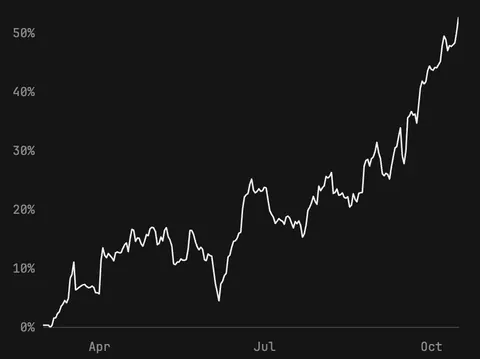
We let AI drive our product roadmap (and it 10x’d our activation rate)
At Basedash, we built an AI agent that acts as a 24/7 data analyst and PM—analyzing all our business data, surfacing insights, and guiding product decisions. The result? A 10× increase in activation rate and faster growth than ever.
AI-Powered Healthcare BI Tools: The Complete Guide for Modern Healthcare Organizations
Learn how leading healthcare organizations are using AI to predict patient risks, optimize resources, and make proactive decisions that save lives and reduce costs.
The Ultimate Guide to Choosing Data Analysis Tools in 2026
Stop drowning in dashboards. Compare data analysis tools, understand what matters, and choose platforms that help your team make better decisions faster.
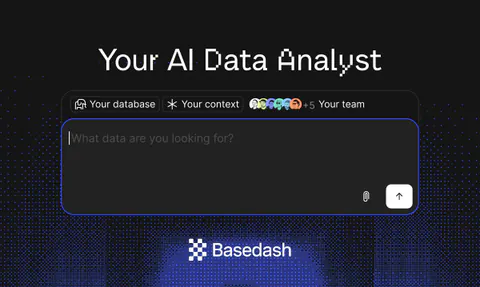
Introducing the Basedash Agent
Your AI data analyst. The Basedash Agent answers questions, creates visualizations, and surfaces insights across all your company's data — with the power of a data analyst and the ease of ChatGPT. Just ask, even right from Slack.
AI Dashboard Software: The Complete Guide for B2B SaaS Teams
Discover how AI dashboard software helps B2B SaaS teams move from static charts to smart, actionable insights. Learn key features, business benefits, and top tools.
How AI is transforming business intelligence for modern teams
Traditional BI tools are slow, siloed, and complex. Learn how AI-native BI makes data accessible via natural language, real-time alerts, and contextual insights.
Self-Hosted AI BI: The Complete Guide for Modern Businesses in September 2026
Self-hosted AI BI tools offer better security, lower costs, and total data control. Learn why growing SaaS teams are ditching cloud BI in this 2025 guide.

Introducing Basedash Self-Hosted
Run Basedash inside your own infrastructure for the most secure deployment and full control over your data. Deploy in minutes with a one-line install, or use Docker, Kubernetes, and even fully air-gapped setups. AI-native BI on your own infrastructure.
AI Data Visualization Tools: The Complete Guide for B2B Teams For 2026
Explore the best AI data visualization tools for B2B teams. Compare platforms like Basedash, Tableau, Power BI & more—faster insights, less complexity.
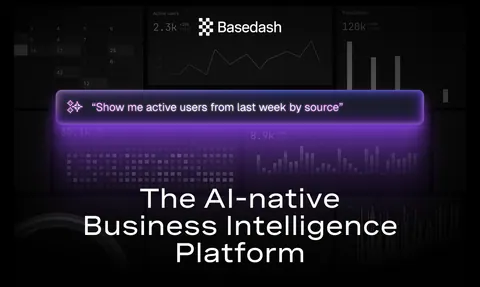
Introducing Basedash: The AI-native BI platform built for today’s teams
Basedash is now publicly available. It’s a powerful, AI-native BI tool that lets you connect any data source and instantly get insights. Describe a chart or ask a question—Basedash handles the rest. Built for the AI era, designed to empower teams.
SaaS Business Intelligence: The Complete Guide for Modern Companies
Discover how SaaS BI tools empower product teams to make faster, data-driven decisions. Learn features, benefits, and top platforms in this complete guide.
Best Product Analytics Software for B2B SaaS in 2026
Explore the top product analytics platforms for B2B SaaS in 2025. Compare features, use cases, and find the right tool to drive product-led growth.
What is an AI graph creator?
Explore how AI-powered graph tools automate chart selection, integrate with databases, and streamline visualization workflows for product and data teams.
The Evolution of the Data Analyst role: how AI is reshaping Business Intelligence
AI is transforming data analysis from spreadsheet drudgery to strategic superpower. See how modern analysts are using AI tools to work smarter and deliver insights faster in 2025.

Is YC worth it?
Learn how YC’s $500K offer—$125K at 7% and a $375K MFN SAFE—benefits startups. From mentorship to funding and an unparalleled network, discover why Y Combinator often outweighs its equity cost.

How Supabase became this generation’s database
Discover how Supabase pivoted from a real-time Postgres tool to a full-fledged open-source Firebase alternative. Learn how rapid product launches, community-driven features, and savvy positioning propelled its success.

Basedash on the main stage at Collision 2023
Discover how Basedash automates internal admin panels with AI, removing the need for custom code. Learn why they presented at Collision 2023 and how their solution saves development time for any company.
Basedash raises $4.4M led by Matrix
Basedash secures $4.4M seed led by Matrix to develop AI-based internal tools, starting with a modern, universal admin panel solution for any company’s data.

Everything you need to know to ace the YC interview
Discover how a solo founder tackled two YC interviews, including real questions, in-person and remote tips, and the importance of concise answers. Learn to impress YC partners and land your spot.
How to write a successful YC application
Explore a successful YC application from Basedash’s solo founder. Get proven tips on clarity, concise answers, and genuine insights to improve your own Y Combinator submission.

How to style console log messages
Discover how Basedash, Linear, and Facebook spice up console.log output using ‘%c’ placeholders. Learn to apply custom fonts, colors, ASCII art, and more to create an engaging console experience.