
Redshift vs MySQL
Redshift and MySQL are both popular databases, but they serve different purposes. Redshift is a fully managed, petabyte-scale data warehouse service by.
 Robert CooperIngénieur logiciel senior
Redshift and MySQL are both popular databases, but they serve different purposes. Redshift is a fully managed, petabyte-scale data warehouse service by.
Robert CooperIngénieur logiciel senior
A rolling average, also known as a moving average, is a statistical technique used to analyze time-series data by creating a series of averages of.
Robert CooperIngénieur logiciel senior
MySQL offers several functions for statistical analysis. One of them is the standard deviation, which measures the amount of variation or dispersion in a.
Robert CooperIngénieur logiciel senior
Learn how YC’s $500K offer—$125K at 7% and a $375K MFN SAFE—benefits startups. From mentorship to funding and an unparalleled network, discover why Y Combinator often outweighs its equity cost.
 Max MusingFondateur et CEO de Basedash
“Nous avons évalué Omni et d'autres outils BI, mais la rapidité pour obtenir un insight avec Basedash est inégalée.”
Greg Demoge
Co-fondateur et CPO · FullEnrich

Lire l'étude de cas →

“Pour une entreprise aussi soucieuse de sécurité que la nôtre, Basedash a immédiatement fait tilt. Des rapports qui prenaient des semaines sont prêts en quelques heures.”
Claudio Godoy
AI Agents Lead · Taxfyle

Lire l'étude de cas →
Discover how Supabase pivoted from a real-time Postgres tool to a full-fledged open-source Firebase alternative. Learn how rapid product launches, community-driven features, and savvy positioning propelled its success.
Max MusingFondateur et CEO de Basedash
Discover how Basedash automates internal admin panels with AI, removing the need for custom code. Learn why they presented at Collision 2023 and how their solution saves development time for any company.
Max MusingFondateur et CEO de Basedash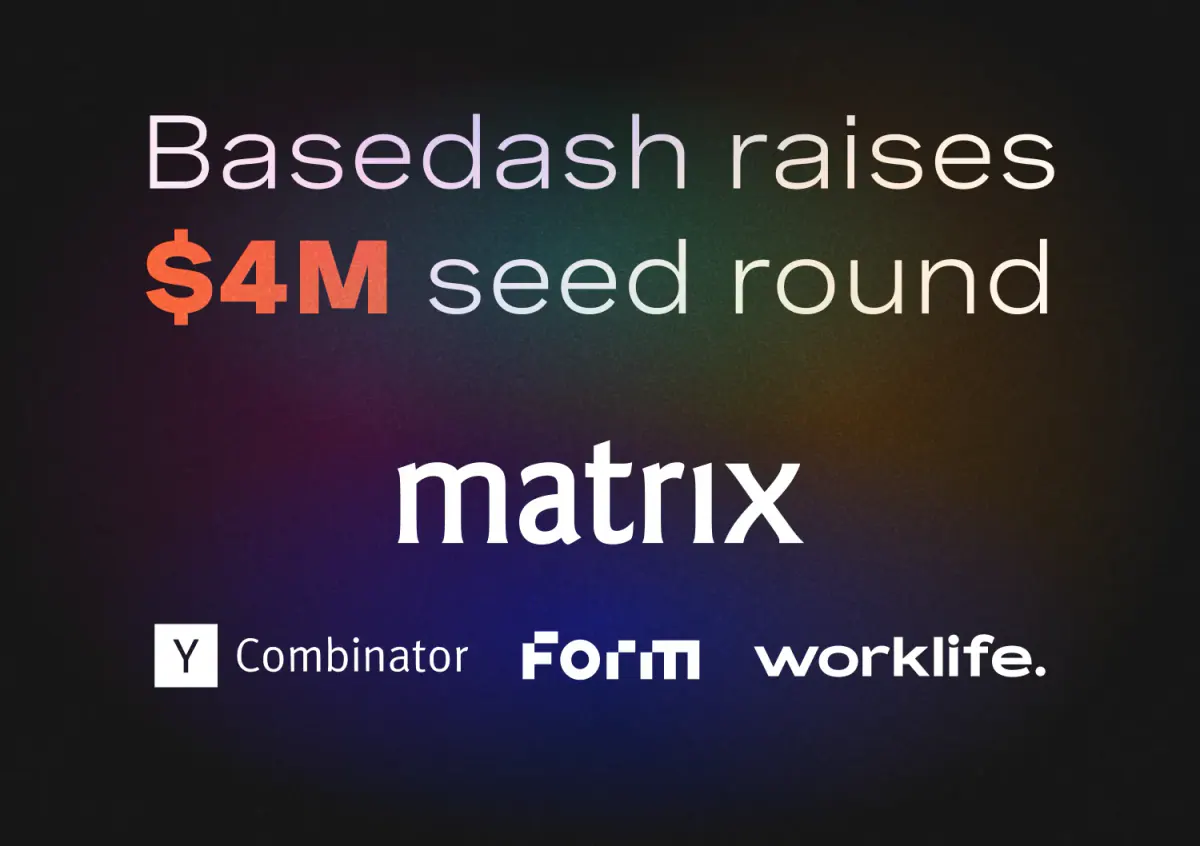
Basedash secures $4.4M seed led by Matrix to develop AI-based internal tools, starting with a modern, universal admin panel solution for any company’s data.
Max MusingFondateur et CEO de Basedash
Discover how a solo founder tackled two YC interviews, including real questions, in-person and remote tips, and the importance of concise answers. Learn to impress YC partners and land your spot.
Max MusingFondateur et CEO de Basedash
Discover how Basedash optimized their blog workflow by transitioning from Webflow to Framer, leveraging a custom markdown component, and integrating Notion for seamless content management.
 Tom JohnsonDirecteur du design
Discover how Basedash uses a TypeScript monorepo with yarn workspaces, shared configs, tRPC, and turborepo to enable code sharing and efficient builds.
Robert CooperIngénieur logiciel senior
Learn how Basedash simplified sidebar page re-ordering by switching from integer indices to floating-point values. Discover the challenges, solutions, and best practices they uncovered.
Robert CooperIngénieur logiciel seniorExplore a successful YC application from Basedash’s solo founder. Get proven tips on clarity, concise answers, and genuine insights to improve your own Y Combinator submission.
Max MusingFondateur et CEO de Basedash
Learn how SQL JOINs work, the importance of foreign-key constraints, and how to correctly structure and query related tables. Explore practical examples using Basedash.
 Jeremy SarchetIngénieur logiciel
See how to generate flow charts in Notion and Github with mermaid.js
Jeremy SarchetIngénieur logiciel
Discover how Basedash left React Query behind for a more robust Redux setup. Explore the benefits of normalized state, fewer bugs, and improved scalability.
Robert CooperIngénieur logiciel senior
Learn how Basedash overcame table-performance challenges using React optimizations, virtualization, and strategic rendering. Discover their 4–5x speed improvements and key takeaways.
Robert CooperIngénieur logiciel senior